
How to Start a Literature Review Faster: From Zero to First Draft
Begin by defining your search terms, core literature, and inclusion criteria. AI can organize candidate papers and extract reading fields; you can then compare relationships among studies, identify gaps, and structure the sections.
A Strong Review Must Establish Three Things
The Problem Matters
Show your supervisor and reviewers why the field cares about this problem. That gives the initial stage a clear boundary.
You Understand the Current Landscape
Identify the main research paths and what each has achieved. Two or three representative papers per path are enough to support a first draft.
Your Point of Entry Is Valid
Explain what existing work has left unresolved and which part your research addresses. Once these three points are clear, reading no longer feels endless.
Three Steps from Topic to First Draft
Give the Research Question to the Search Agent
Describe the topic in natural language instead of trying to perfect keywords first. The system expands the terms, searches real literature, and groups results by theme; those groups already provide an overview of the field.
Generate a Draft with Real Citations
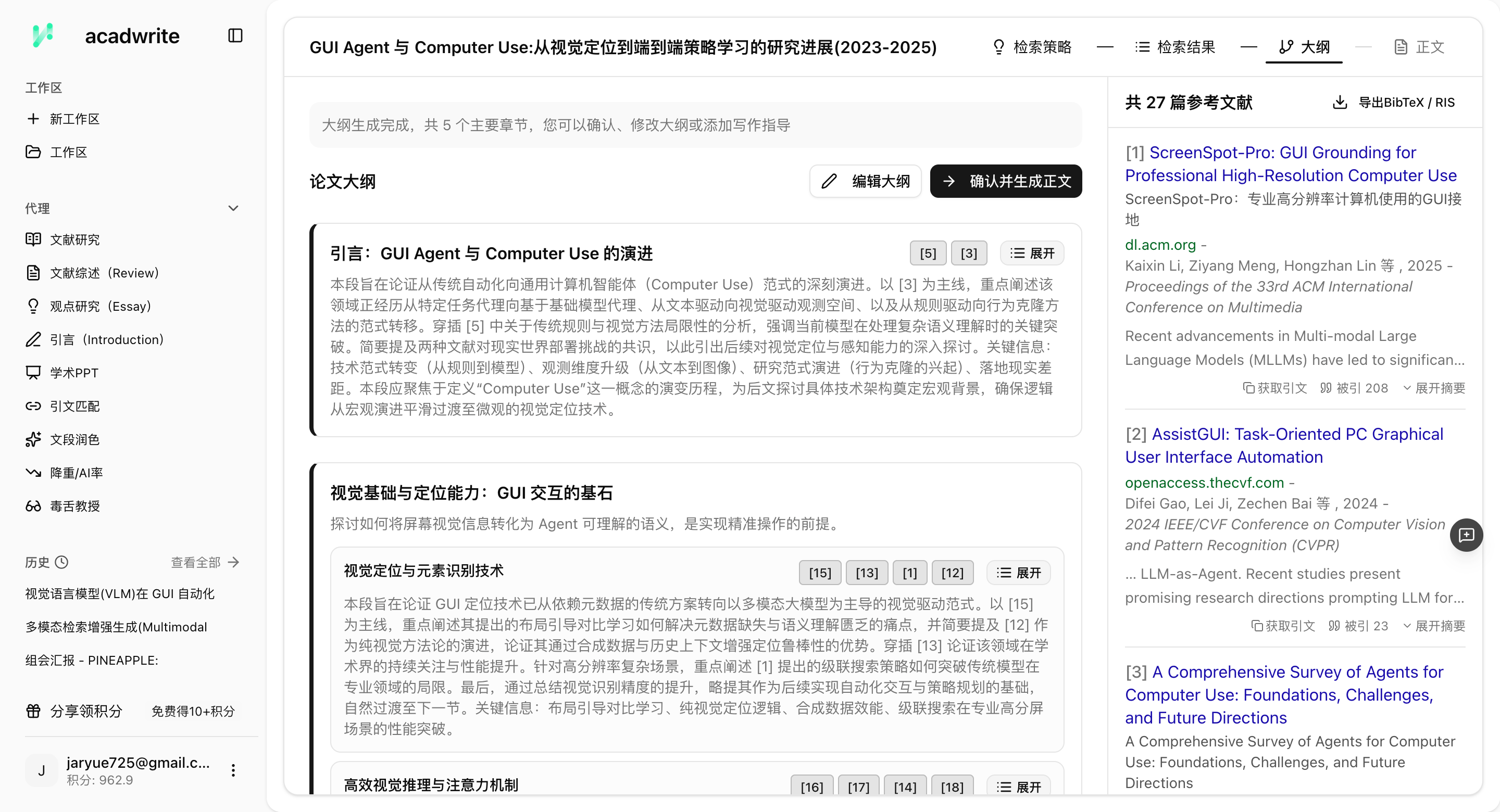
The cloud agent literature-review task searches, screens, and synthesizes the literature after you enter a topic, producing a draft with verifiable citations. You remain responsible for annotating, checking, and revising it.
Turn the Draft into Your Review in the Workspace
Check each citation against the source, reorganize the discussion around your contribution, add relevant local-language literature, and write your own critique. Use the agent to probe disagreements and incorporate useful answers directly into the draft.
Search, Screen, and Draft with Scientify
The traditional process is slow because you must complete a large amount of transcription before synthesis can begin. Scientify changes that order: the workflow handles search, screening, and initial synthesis, so from day one you have a draft you can annotate, challenge, and reorganize.
- The search agent expands terms, finds real papers, and returns results grouped by theme
- The review workflow searches, screens, and synthesizes a draft with verifiable citations
- The workspace helps you check citations, reorganize by your research angle, add local-language sources, and write your critique
- Use the agent to ask where two research groups disagree or which findings contradict one another
Common Questions When Getting Started
How many papers must I read before I can start writing?
Ask whether you have evidence for the three core claims: importance, current landscape, and your point of entry. Two or three representative papers for each major line of work, plus one or two highly cited reviews, can usually support a first draft. Detailed gaps will reveal themselves as you write. The idea that you must read fifty papers first is one of the biggest barriers to starting.
Will an AI-generated draft contain fake citations?
A cloud agent literature-review task designed for academic work cites papers retrieved from real searches and lets you open each source for verification, unlike general chat tools that may invent references from memory. Still, a paper being real does not mean it supports the claim correctly, so checking the source remains essential.
What if my supervisor says the review reads like a list?
This usually begins when papers are summarized in reading order instead of being organized by theme. Return to thematic grouping: let the groups determine the sections and let consensus and disagreement within each group determine the paragraphs. Start every paragraph with a claim and use the literature as evidence.
How does Scientify help me start a literature review faster?
Scientify delegates the most time-consuming transcription work to the system. The search agent maps the field and the review workflow produces a draft with real citations, so you can begin evaluating relationships, identifying gaps, and building a narrative from day one. You still need to verify each citation and rewrite every section in your own analytical voice.
Continue Reading
Get Through the Hardest Part Today
Open the cloud agent literature-review task, enter your research direction, and complete the difficult journey from a blank page to a first draft in one session.