
Build the Evidence and Structure Before Drafting
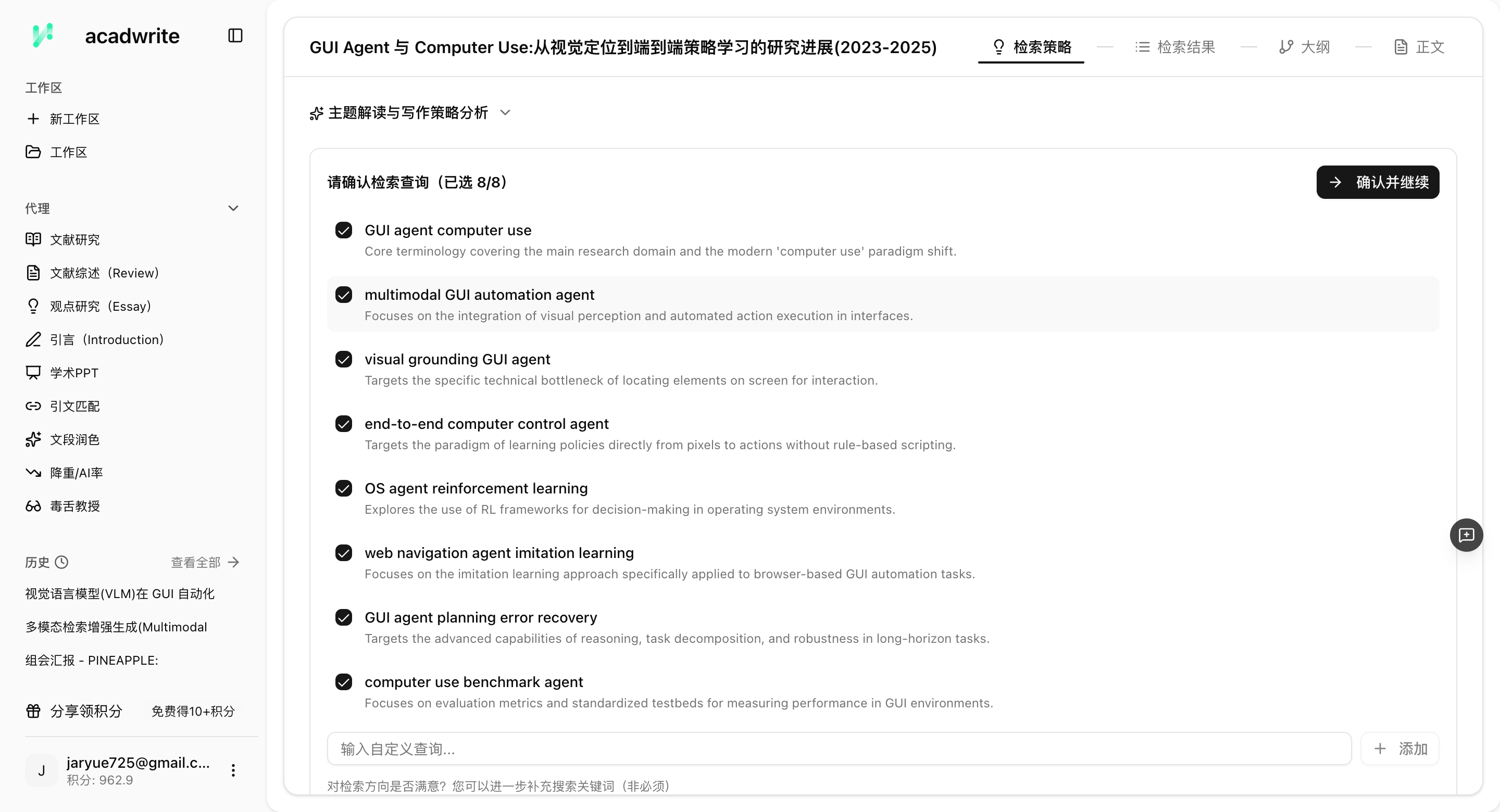
Systematically search, screen, classify, and synthesize research around one question. Set the scope and outline before using AI for an editable draft.
| Stage | Records to retain | Completion standard |
|---|---|---|
| Search | Databases, queries, and dates | Another person can reproduce the search |
| Screen | Inclusion and exclusion rules and reasons | Every decision has an explicit basis |
| Extract | Question, method, sample, conclusion, limitation | The same fields can be compared |
| Write | Section question, evidence, comparison, conclusion | Every judgment can be located in a source |
Five Steps from Zero to a Draft
Narrow the topic
Turn a broad direction into a searchable question.
Search systematically
Develop keywords, synonyms, and English queries.
Screen core literature
Filter by relevance, quality, and recency.
Build the outline
Group by theme, method, or chronology.
Draft and revise
Draft from selected papers and add human critical analysis.
Judgments a Strong Literature Review Must Make
Where the field stands
Explain major directions, representative work, and conclusions.
How papers relate
Compare methods, data, conclusions, and limitations.
Why more research is needed
Use limitations, disputes, or gaps to motivate the question.
Every claim has support
Match judgments to real publications.
Avoid stacking abstracts
Include comparison and synthesis in every section.
Retain your own judgment
The researcher owns value judgments and final wording.
AI Helps with Search Organization and Initial Drafting
It can generate search strategies, candidate papers, an outline, and a draft, while researchers decide scope, logic, and conclusions.
- Expand a topic into multiple search strategies
- User confirms candidate papers
- Adjust the chapter logic in the outline
- Verify every draft citation
Frequently Asked Questions
How do I write a review from only a topic?
Narrow the question, then search, screen, group, outline, and draft section by section.
What are the most common mistakes?
An overly broad topic, paper-by-paper summaries, no comparison, and citations that do not support claims.
How can Scientify help?
It helps retrieve real papers, screen material, build an outline, and generate an editable draft.
Run the Literature Review Workflow
Search and organize literature before generating an editable outline and draft.