
Expand search terms
Turn the topic into English queries, synonyms, and subtopics to find candidate papers faster.
Search and screen real papers first, then build an evidence table and section structure. AI can organize the first draft, but every finding, condition of use, and citation location must be verified in the original paper.
Turn the topic into English queries, synonyms, and subtopics to find candidate papers faster.
Group papers by question, method, or conclusion so each group forms a comparable theme.
Draft sections only from selected papers. Every fact and research finding should point to a specific source.
AI can misread abstracts or omit limitations. Return to the original paper to determine whether a claim holds.
Check the DOI, title, authors, and source. Do not use records without an original source.
Compare agreements, conflicts, and limitations across studies, then write the final interpretation yourself.
State the population, date range, document types, and exclusions. Record title, authors, year, source, and DOI.
Record each paper's question, method, sample, findings, and limitations, then organize sections around comparable questions.
Restrict AI to included papers. Begin each paragraph with a synthesis, then identify studies that support, oppose, or limit it.
Check the paper identity, source location, and support relationship, then fix overgeneralization, missing conditions, and list-like paragraphs.
Scientify's cloud agent can start from a research topic or existing library, then assist with search, screening, outline organization, and a cited first draft. The author retains responsibility for judgment and verification.
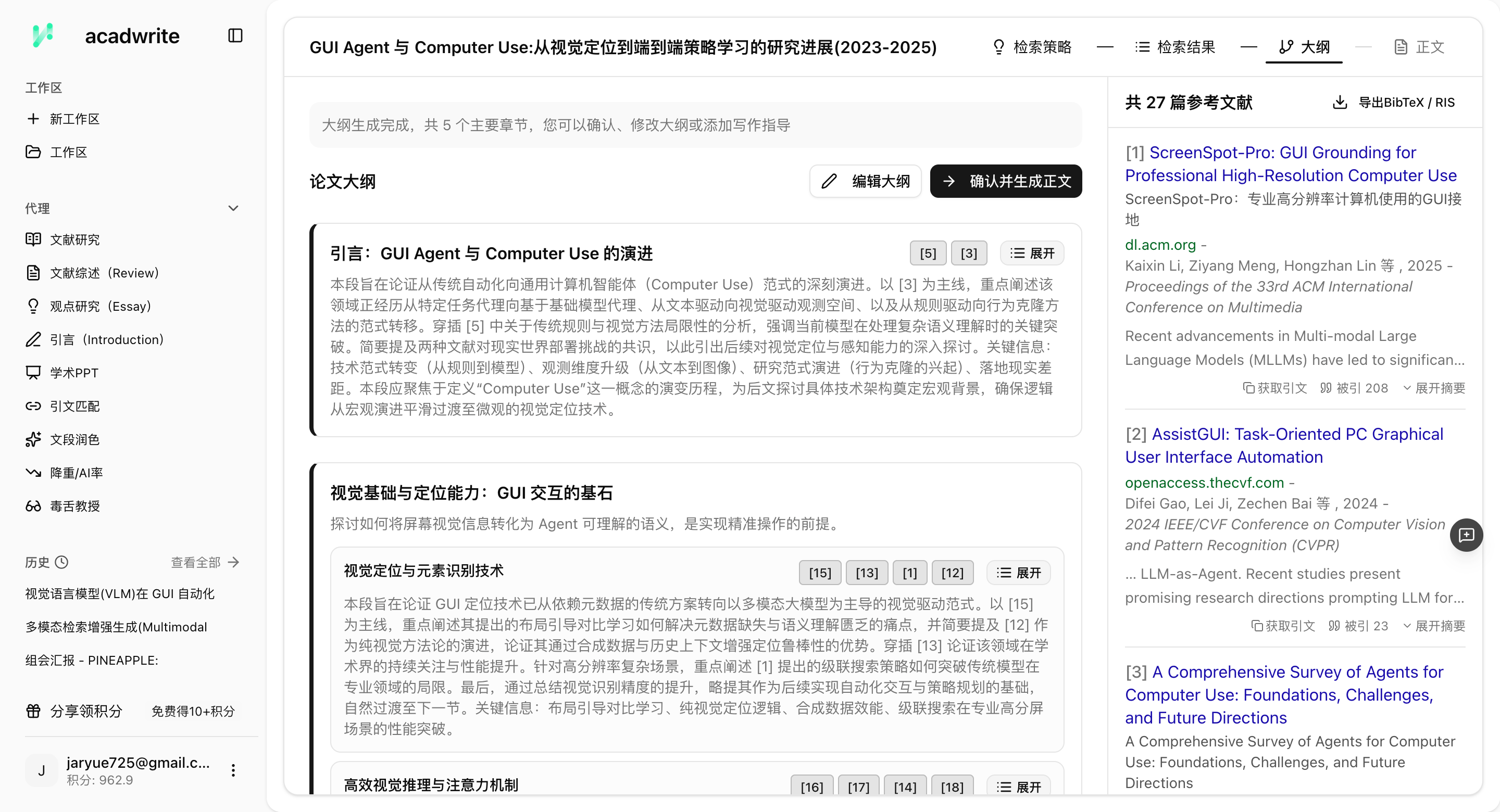
Fix the source set and inclusion criteria first. Then build an evidence table, organize sections, draft, and verify every citation. Every important claim should return to a location in the original paper.
Common problems include incorrect paper identities, mismatched claims and citations, omitted conditions, and paper-by-paper listing. Search records and an evidence table make these issues auditable.
Scientify starts from a topic or library, helps search papers, organizes an outline, and generates a cited draft. The author still makes judgments, verifies citations, and revises the prose.
Build a verifiable literature list first, then create editable section drafts with citations.