
Existence: does it actually exist?
Search the title in Google Scholar, CNKI, or PubMed. If it cannot be found, it is probably hallucinated.
References produced by AI may come from retrieval or from model generation. Generated references require verification. Even sourced citations must be opened to check the title, authors, study population, and conclusion.
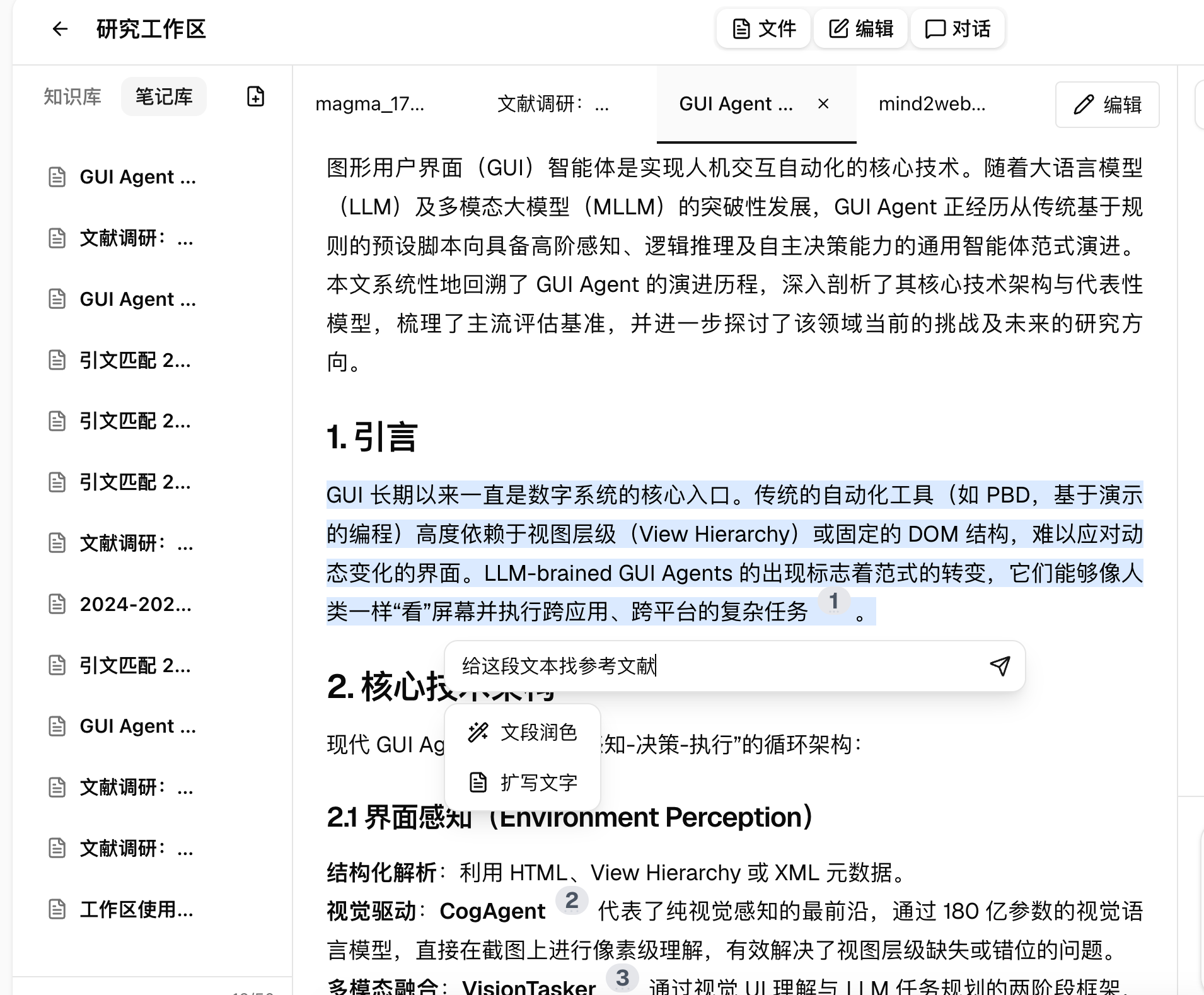
Search the title in Google Scholar, CNKI, or PubMed. If it cannot be found, it is probably hallucinated.
Check authors, year, journal, volume, pages, and database records. Watch for real authors paired with invented titles.
Open the abstract. AI sometimes cites a real paper for a claim the paper never made.
Distinguish peer-reviewed papers and preprints from news releases and blogs. Prefer scholarly sources in academic writing.
A vague prompt can retrieve papers that are related but do not answer the question.
A model may turn a narrow finding into a universal conclusion. Only comparison with the original text reveals this distortion.
Determine whether the tool generates from memory or cites retrieved sources, and when retrieval may fall back to memory.
Search the title in Google Scholar, CNKI, or PubMed to remove nonexistent references first.
Confirm that authors, year, journal, and DOI match the database record.
Open the abstract and confirm that the paper supports the sentence for which AI cited it.
Determine whether the source is peer reviewed, a preprint, or a blog, and prefer authoritative sources.
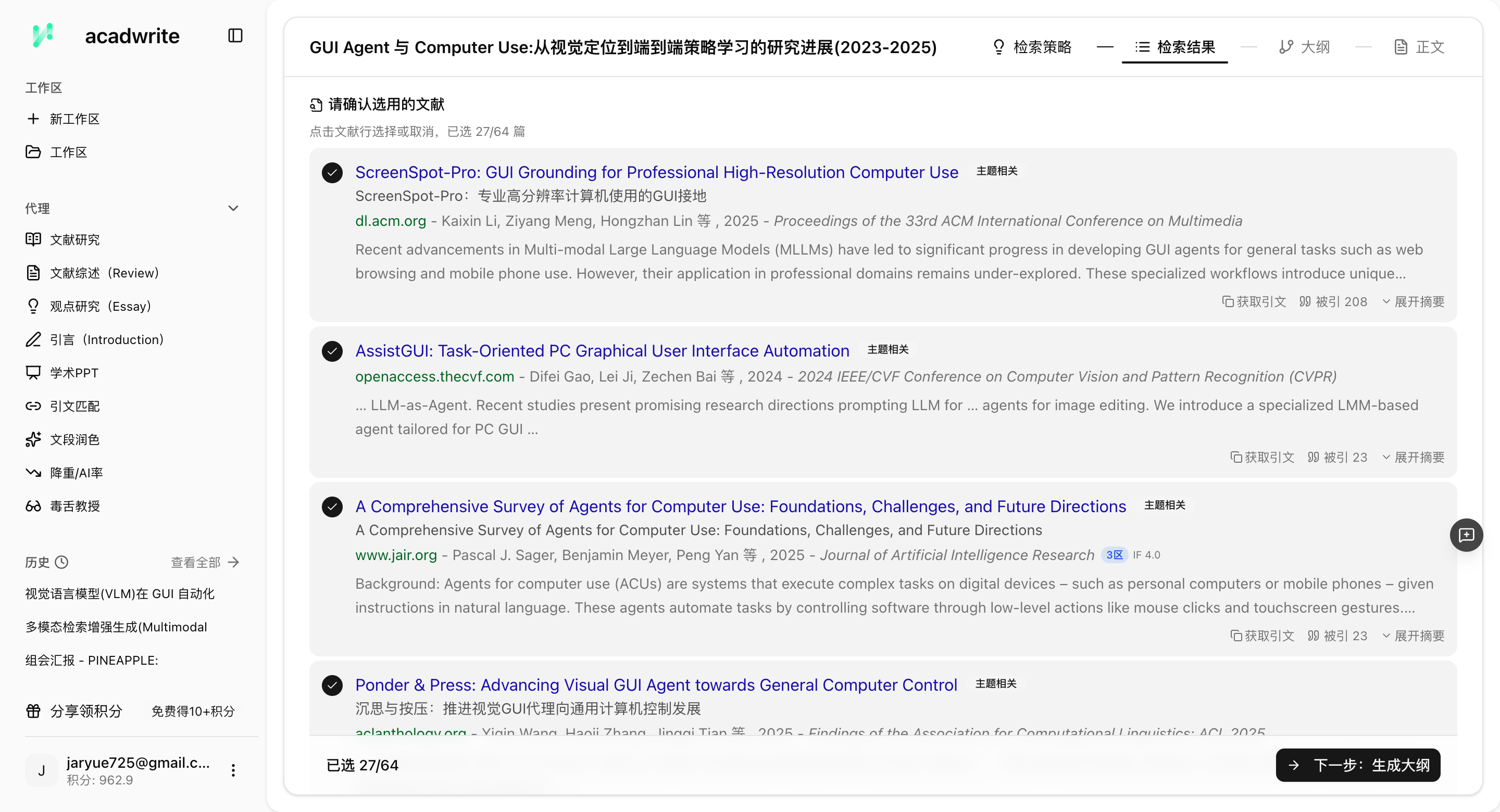
Checking every record manually is expensive. Scientify's cloud agent searches real sources, locates the passages that support each claim, and preserves search and screening records. Authors still verify that every citation supports its claim.
They imitate statistical patterns in real literature—plausible authors, journals, and years—while the combination may not exist. Correct formatting does not prove authenticity; verify it in a database.
The linked webpage usually exists, but a public web source is not automatically scholarly. Academic writing should replace and verify it with journal-level evidence.
No. Retrieval drift, overgeneralization, and gaps in the source pool can all misuse real papers. Open the original text to check.
Scientify's cloud agent searches real academic sources, builds review citations from retrieved results, and links references to original records, shifting verification toward whether the evidence fits the claim.
Enter a research direction, search real academic sources, and group results by topic so later review citations trace back to original records.