
AI literature review in practice: a complete workflow from search to draft
A literature review requires searching, screening, synthesis, and citation verification. A research assistant can support search, close reading, drafting, and review in sequence. Sources, reading records, and drafts stay in one workspace, while every citation remains traceable to the original paper.
A usable AI review workflow needs both
Search returns real papers
Enter a research question in natural language, expand academic keywords, and retrieve papers you can open instead of references recalled by a model.
Group papers by research direction
Automatic topic groups turn included papers into candidate review sections, making the structure visible immediately after search.
Compare studies to find conflicts
Create evidence cards for each group and compare them to identify conflicting findings, one of the most valuable materials in a review.
Verify every citation at its source
Writing uses real materials in the source library, and every citation can return to the original paper to confirm the claim it supports.
Keep the context connected
The source library retains search results, reading records, and evidence cards for later revisions.
Check compliance before submission
Run AI-content and similarity checks before finalizing so potential institutional issues can be addressed early.
From topic to submission-ready review, step by step
Week 1: search and build the library
Enter the research question, search real literature, group it by topic, and store included papers and existing PDFs in the workspace library.
Week 2: close reading and extraction
Organize questions, methods, samples, conclusions, and limitations by group, then compare disagreements. Confirm central findings in the original papers.
Week 3: draft
After generating a cited draft, verify and rewrite it section by section. The final text must express your own scholarly judgment clearly.
Week 4: review and refine
Verify every reference and its format, expose weaknesses with a pre-submission review, and make the language consistent.
Before submission: compliance checks
Check AI-content markers and rewrite high-scoring passages manually; address excessive similarity when needed, then reread to ensure the academic meaning has not changed.
Use Scientify for literature review search, reading, and writing
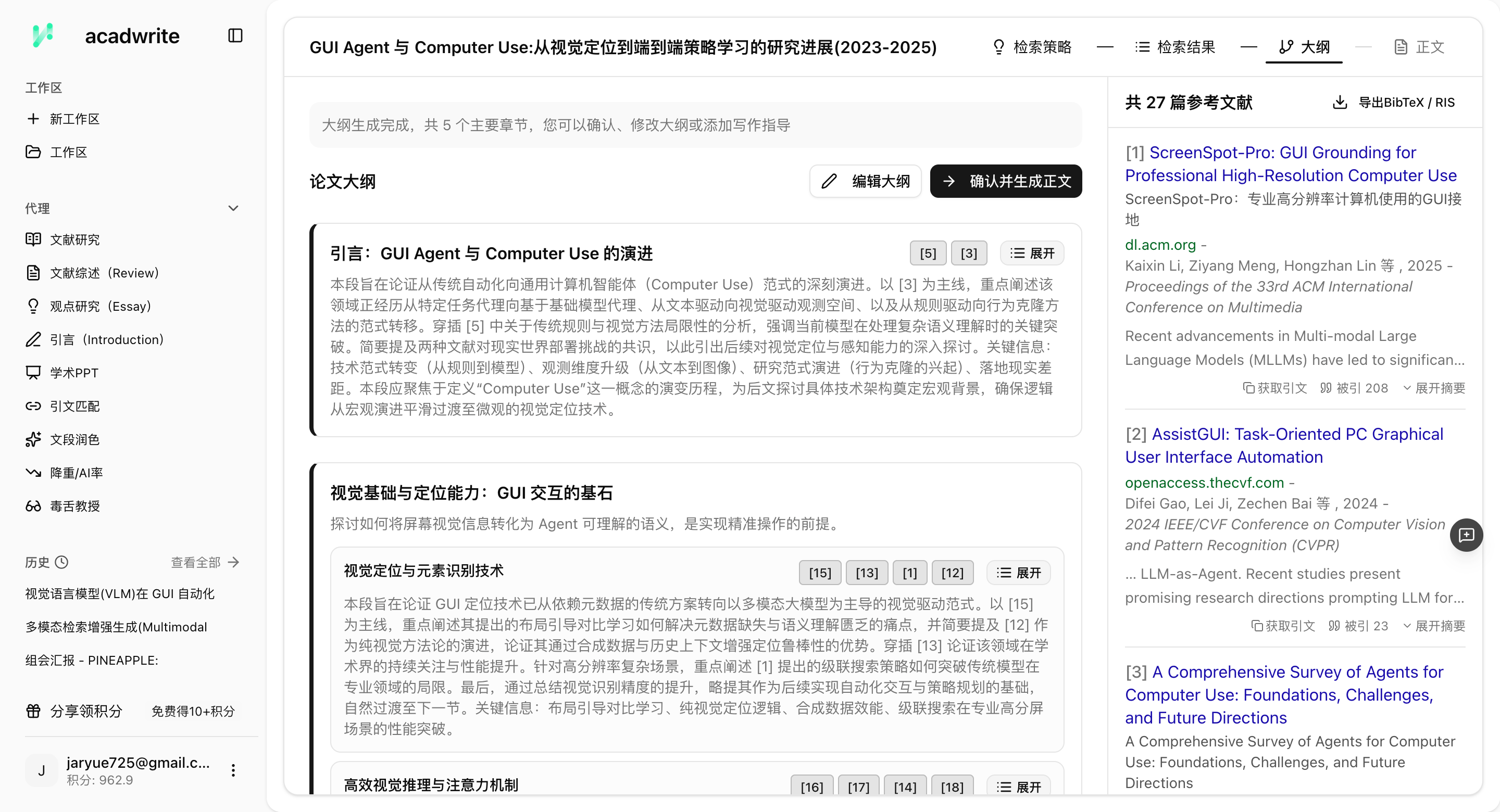
The Scientify workspace combines a source library, rich-text editor, and research assistant. Close reading can reuse earlier search results, and revisions can continue from reading records and evidence cards.
- Keep the library, editor, and research assistant in one workspace so search materials flow into writing
- Use separate search, review, citation matching, and polishing functions for their respective tasks
- Base writing on real library materials and trace every claim to a source
- You write the final synthesis and research-gap argument; AI supplies strong intermediate materials
Frequently asked questions
How does this workflow differ from asking ChatGPT to write a review directly?
It searches papers you can open before writing from selected materials, preserving sources and verification locations throughout. A general chat-generated review still requires separate search, screening, and citation verification.
Can an AI-generated review contain fabricated citations?
General chat AI carries that risk. This workflow uses traceable real literature, but you should still confirm that every reference exists, supports the claim, and follows institutional formatting rules.
What AI-era checks are needed before submission?
Review AI-content results and manually rewrite high-scoring passages, then check similarity. Reread any assisted rewrite to ensure the academic meaning remains unchanged.
How does Scientify help complete an AI literature review?
The workspace stores literature, reading records, and drafts together. The research assistant extracts evidence, the review function creates a cited draft, and citation matching and polishing address references and expression.
Continue reading
Build your source library now and see your review in four weeks
Open the workspace and turn included papers into a source library. AI gets you to the point where thinking begins; reading sources, making judgments, and forming arguments remain yours.