
Use AI to Trace How One Paper Grew into a Field
Start from a core paper, confirm foundations backward, inspect later improvements forward, and compare parallel routes. Record every relationship and its source evidence as a research timeline.
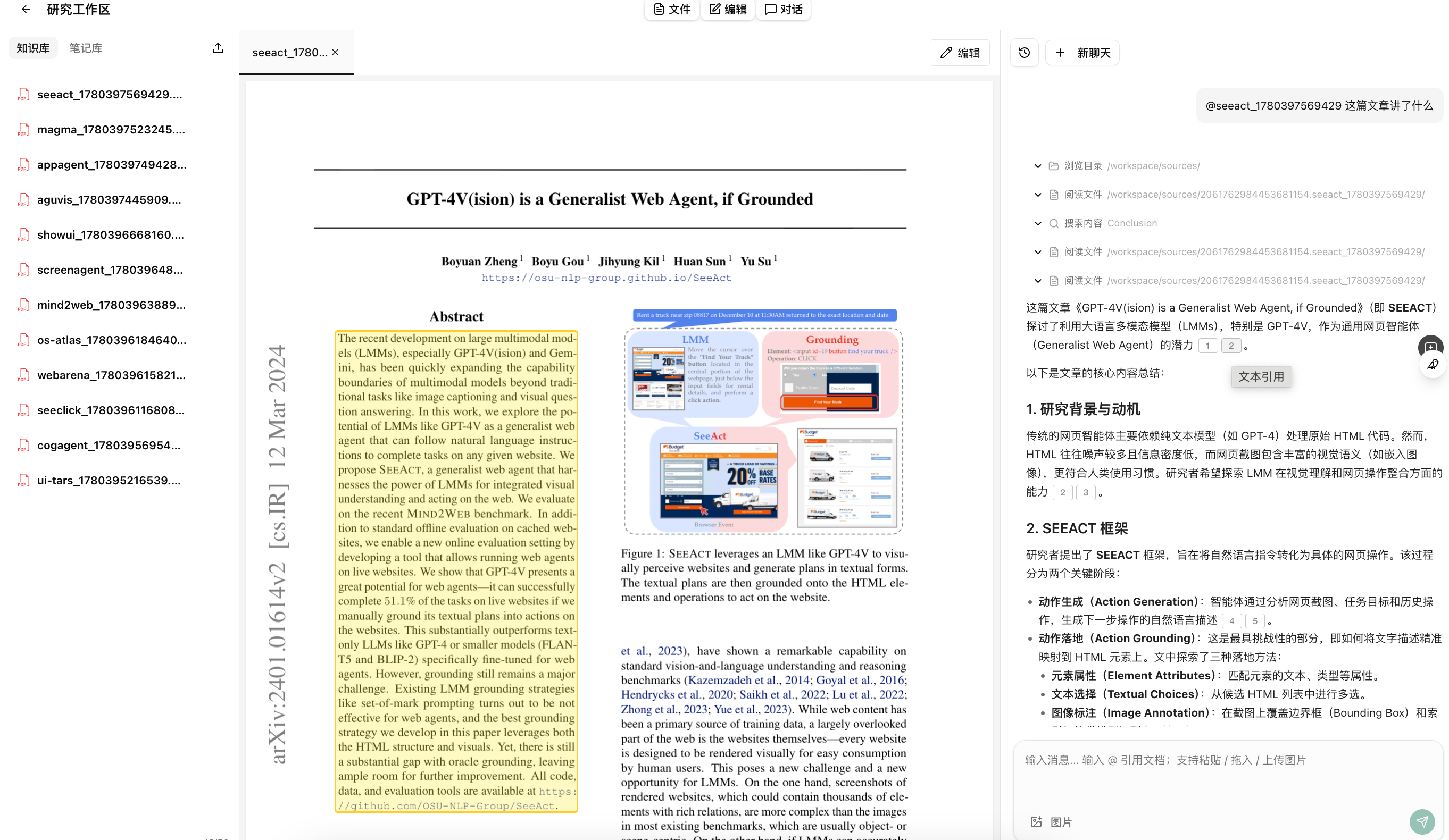
Research Lineage Record
| Relationship | Question to answer | What to record |
|---|---|---|
| Foundational work | Which concept, method, or dataset did the core paper explicitly inherit? | Cited paper, inherited element, and citation location |
| Later improvements | Which component did later papers change, and which limitation did that solve? | Target, baseline, result, and applicable conditions |
| Parallel routes | Which contemporary methods addressed the same problem? | Method and data differences, metrics, and conclusions |
| Disputes and gaps | Which conclusions conflict, and which contexts remain uncovered? | Sources of conflict, limitations, and researchable questions |
Turn “Map the Field” into Actionable Questions
Trace upward: foundations
Which foundational papers supplied the key methods and concepts? These are the backward entry points.
Trace downward: later development
Which later studies improved or challenged it? Group by theme to reveal branches.
Look sideways: parallel routes
Which contemporary routes addressed the same problem? Compare objects, methods, data, and conditions.
Connect to your work
Where does your question attach to this lineage? That connection naturally defines a topic.
Watch terminology drift
A concept may have had a different name ten years ago, causing keyword search to miss its origins.
Verify key nodes
Relationships proposed by an assistant require evidence and confirmation in the source.
Connect the Dots in Four Steps
Read the anchor paper closely
Upload the core paper, extract its structure, and identify repeatedly cited foundational works in the introduction and related work.
Trace foundational papers backward
Confirm each entry paper, arrange inheritance chronologically, and record older terminology.
Trace later development forward
Search recent literature by method and problem names, group by theme, and compare advances and limitations across branches.
Write the timeline narrative
Arrange key nodes chronologically in a lineage document, then adapt it into a lab-meeting talk or state-of-research section.
Trace Research Lineage from Literature in Scientify
Scientify answers tracing questions from knowledge-base papers. Confirm foundations, later improvements, and parallel routes step by step, then organize them into a narrative document.
- Upload a core paper and extract repeatedly cited foundations
- Group literature by theme to reveal later branches
- Compare which components studies improved and their reported limitations
- Turn the timeline into a presentation or state-of-research section in the editor
Frequently asked questions
How do I verify that paper A influenced paper B?
Record the cited passage, then inspect how B describes A's role. Use the original wording for important relationships.
What if the field is too large to finish tracing?
Control the entry point. Start with one paper, trace only direct foundations backward and branches relevant to your question forward, and record the scope boundary.
Is this the same as a literature review?
Lineage tracing is understanding work that produces a private timeline; a literature review is writing for readers. A sound timeline makes the later review easier.
How does Scientify help trace a lineage?
Scientify answers tracing questions from knowledge-base papers and organizes foundations, later developments, and parallel routes into a document. Your question defines the scope.
Start by Asking Which Foundations This Paper Uses
Choose a core paper and upload it. Organize literature into foundations, later improvements, parallel routes, and disputes.